
Autonomous Robotic Navigation Takes Another Leap Forward with Naviscope™
LumenGuides' Naviscope™ completes successful pre-clinical studies at Shamir Medical Center, demonstrating precise autonomous bronchoscopic navigation for lung diagnostics.
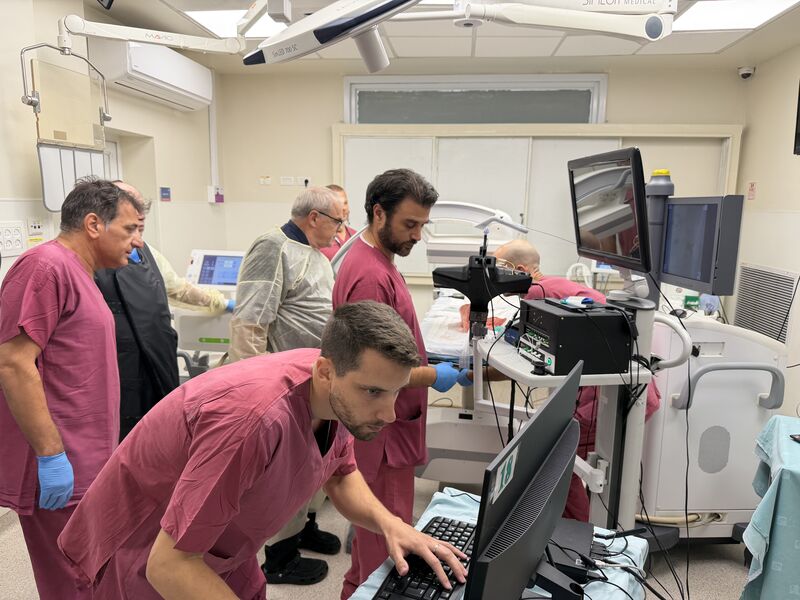
LumenGuides' revolutionary Naviscope™ system demonstrates precise, autonomous navigation in bronchial procedures, marking a significant milestone in the future of lung diagnostics and minimally invasive interventions.
Breaking New Ground in Autonomous Bronchoscopy
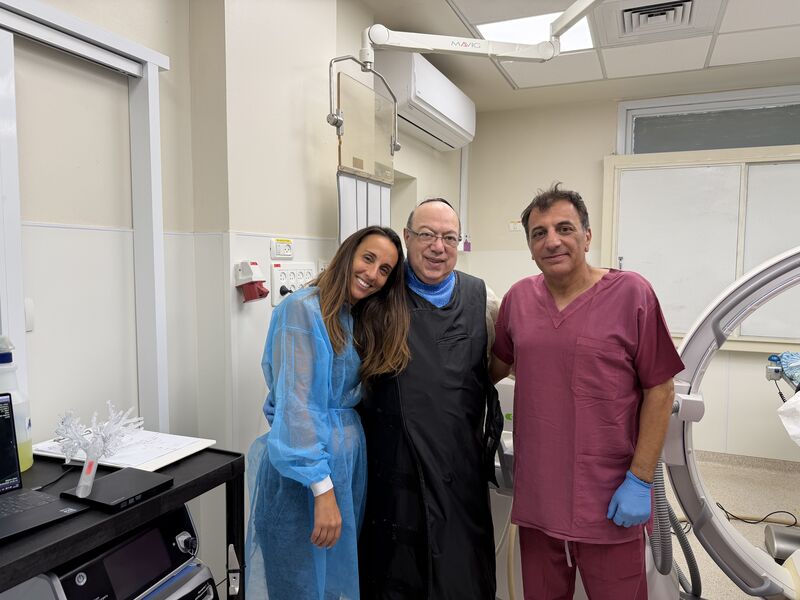
In a remarkable demonstration of medical robotics innovation, LumenGuides' Naviscope™ system has successfully completed two additional pre-clinical pilot animal studies at Shamir Medical Center (Assaf Harofeh). These studies represent a pivotal advancement in autonomous bronchoscopic navigation, showcasing the platform's ability to navigate deep into the bronchial tree with unprecedented precision and reliability.
The Naviscope™ system is a robotic platform specifically designed to enhance precision and accessibility in lung diagnostics and minimally invasive interventions. By combining AI-powered guidance, fiber-optic sensing, and autonomous robotics, LumenGuides is addressing critical gaps in current lung cancer diagnosis and treatment procedures.
Study Results: Precision Meets Performance
Study #3: In Vivo Autonomous Navigation
The third study was conducted on a live anesthetized pig (in vivo), providing the most realistic test environment for evaluating the Naviscope™'s capabilities. The results were nothing short of impressive:
- Autonomous navigation to defined targets in both lungs was achieved successfully
- The system reached the fifth bronchial bifurcation within less than one minute per side
- Results were verified using 3D airway modeling and X-ray imaging
- Full concordance was demonstrated with manual navigation performed by Prof. Mordechai Kramer using a standard single-use bronchoscope (AMBU)
This study validated that Naviscope™ can match the accuracy and speed of expert manual bronchoscopy while operating autonomously—a critical milestone for future clinical translation.
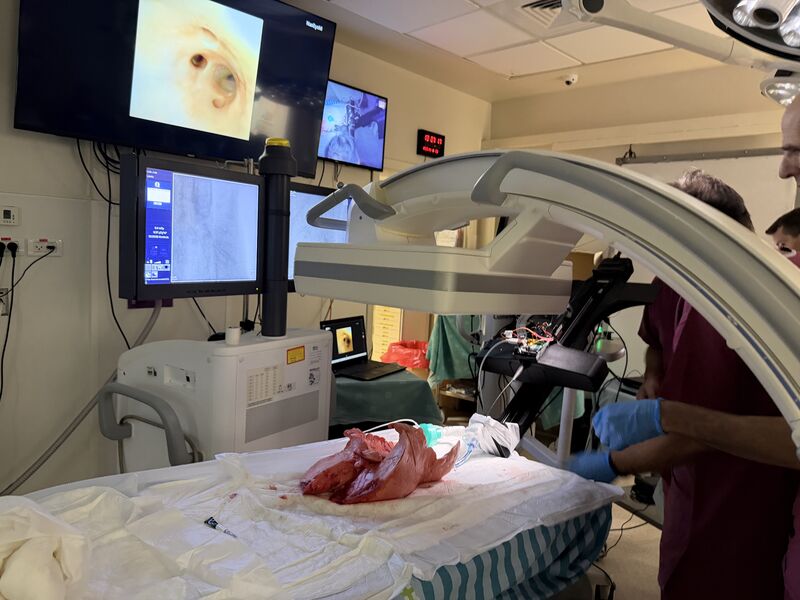
Study #2: Simulated Lesion Targeting
The second study was conducted on a ventilated respiratory specimen from a live pig in which metallic coils had been pre-implanted to simulate a realistic pulmonary lesion. This setup allowed researchers to test the system's ability to locate and navigate to specific targets within the lung tissue.
After a minor mechanical correction, Naviscope™ completed accurate autonomous navigation to the metallic target, with results confirmed both visually and radially. This demonstrates the platform's potential for precisely targeting lung nodules and lesions—a critical capability for early lung cancer diagnosis.
Key Findings and Clinical Implications
The combined results from these studies highlight several critical achievements that position Naviscope™ as a transformative technology in interventional pulmonology:
- ✓ Reliable autonomous navigation to deep airway regions with high precision and stability
- ✓ Equivalent accuracy and speed compared with expert manual bronchoscopy supported by radiation protocols
- ✓ Strong feasibility for future clinical translation in early lung cancer diagnosis and minimally invasive procedures
- ✓ Radiation-free operation, eliminating patient and clinician exposure to harmful imaging radiation
These findings are particularly significant given the current limitations in bronchoscopy. Traditional systems fail to reach approximately 40% of lung nodules, and competing procedures can exceed $20,000 while posing higher risks to patients. Naviscope™ addresses these critical gaps by offering a more accessible, cost-effective, and safer alternative.
The Technology Behind the Innovation
What sets Naviscope™ apart is its unique integration of cutting-edge technologies:
- Fiber-optic sensing (FBG) provides real-time 3D airway mapping from inside the lungs
- AI-powered robotic guidance ensures autonomous, accurate navigation without external imaging
- No CT, fluoroscopy, or electromagnetic navigation (EMN) required—making procedures faster and safer
- Single-use design eliminates cross-contamination risks and simplifies workflow
This first-of-its-kind autonomous navigation system represents a meaningful step forward in early lung cancer detection, potentially redefining how clinicians access and treat deep pulmonary nodules.
Looking Ahead: From Lab to Clinical Reality
Following these successful studies, the LumenGuides team is now ramping up toward establishing its assembly facility at Kibbutz Nir-Am. The focus is on continued development, Quality Management System (QMS) implementation, and Verification & Validation (V&V) processes—all critical steps in the journey to make autonomous robotic bronchoscopy a clinical reality.
The upcoming milestones include:
- Platform and design freeze with comprehensive V&V protocols
- First-in-human pilot study with 30 patients
- FDA 510(k) submission
- Expanded pre-clinical studies to further validate safety and efficacy
With the global bronchoscopy market projected to reach $17.6 billion by 2030 (7.4% CAGR), and with 500,000 annual procedures in the U.S. alone, the commercial opportunity for Naviscope™ is substantial.
Join the Revolution in Lung Cancer Diagnostics
LumenGuides is currently seeking strategic investors to complete its seed round. If you're passionate about autonomous robotics in medicine and want to shape the future of lung cancer procedures, this is an opportunity to be part of a transformative innovation.
Contact:
Limor Prigan, ChE, MBA
Founder & CEO | LumenGuides
📞 +972-54-731-7251
Why This Matters
Lung cancer remains one of the leading causes of cancer-related deaths worldwide, with early detection being critical to improving survival rates. Current diagnostic methods often fall short, leaving many lesions unreachable or requiring expensive, radiation-intensive procedures.
Naviscope™ represents the first step toward autonomous, radiation-free interventional pulmonology. By integrating AI, robotics, and optical sensing, LumenGuides aims to drastically improve how clinicians detect and treat early-stage lung cancer—potentially saving thousands of lives each year.
These recent pre-clinical successes at Shamir Medical Center demonstrate that this vision is rapidly becoming reality. As the technology continues to advance through rigorous testing and validation, the medical community moves closer to a future where precise, autonomous, and safe lung diagnostics are accessible to all patients who need them.
The future of interventional pulmonology is autonomous, precise, and radiation-free—and it's arriving sooner than you think.